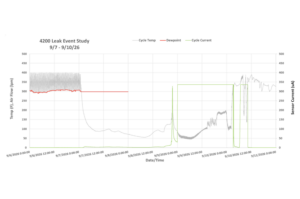
Early Detection of a Tube Leak Using the Ei4200 Dewpoint Monitor
An Ei4200 was installed at a sulfuric acid plant (sulfur burner) in the central United States in October of 2025. The instrument operated continuously

An Ei4200 was installed at a sulfuric acid plant (sulfur burner) in the central United States in October of 2025. The instrument operated continuously

For coal-fired power plants, PS 12B sorbent traps remain the preferred mercury compliance strategy. They are trusted, cost-effective, relatively simple to operate, and well
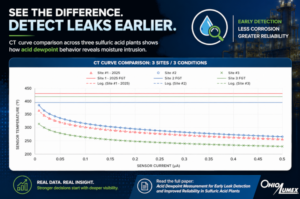
Sulfuric acid plants don’t usually get much warning before moisture-related problems start causing corrosion, hydrogen formation, and expensive maintenance issues. By the time a
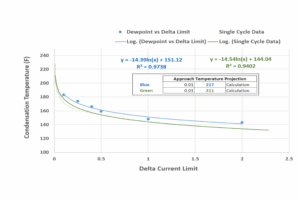
Understanding and controlling approach temperature is critical to the effective operation of dry scrubbing systems. In our latest technical paper, Direct Measurement of Approach

Approach Temperature plays a key role in the performance and reliability of circulating dry scrubber systems. Operating too far above the optimal range can

Background During this Phase IIb SBIR project, Ohio Lumex continued development of a sorbent trap method for continuous monitoring of metal hazardous air pollutant

Background In the Fall/Winter 2021 Edition of Sulfuric Acid Today, Dan Menitti with Mississippi Lime Company (now MLC) authored an introductory article (1) that

Mercury emissions monitoring can feel like a complicated maze of regulations and technical steps, but at its core, it’s about ensuring cleaner air and

Relative Accuracy Test Audits (RATAs) are essential for ensuring that mercury monitoring systems are functioning correctly and reporting accurate data. However, many facilities run

As facilities perform 7-day sorbent trap sampling, many operators, especially those newer to the industry, have had to learn through trial and error. It’s

Industrial facilities increasingly face regulatory and community pressures to monitor and reduce hazardous air pollutants (HAPs). Metals like arsenic, lead, and chromium, often emitted

Traditional mercury (Hg) continuous emissions monitoring systems (CEMs) face significant challenges due to the extremely low concentrations of Hg in flue gas, interference from